
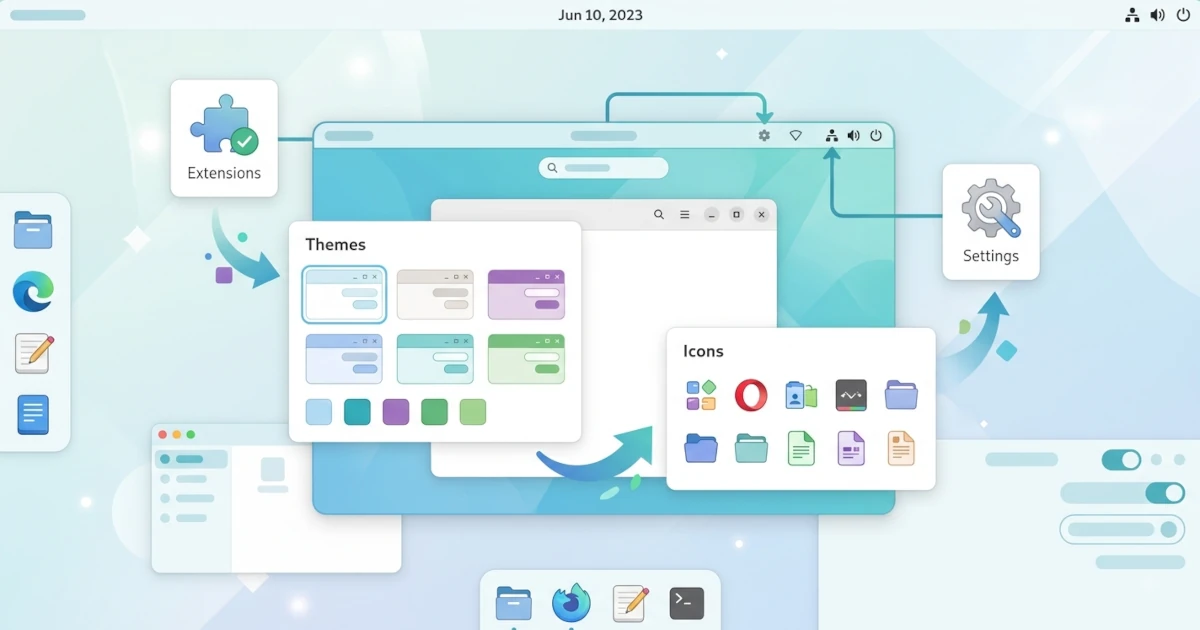
GNOME is known for its clean and simple design, but that simplicity does not mean its interface cannot be customized. Through GNOME Extensions, GNOME Tweaks, and built-in settings, we can adjust the desktop look and behavior to suit our preferences. This chapter covers various ways to customize GNOME 50 on Ubuntu 26.04 LTS and Fedora Workstation 44, while clarifying several old habits that have changed in this GNOME release.
38.1 GNOME Extensions
GNOME Extensions are add-ons that add or modify GNOME features. Through extensions, we can add a dock, blur effects, or even reminders to keep the screen from going to sleep.
38.1.1 Installing GNOME Extensions Manager
The easiest way to manage extensions is through the official Extensions app developed directly by the GNOME project to enable, disable, and configure preferences for each extension. On Fedora Workstation 44, this app is available directly from the official repositories:
sudo dnf install gnome-extensions-appOn Ubuntu 26.04, the official Extensions app is not packaged under a standard APT package name, so the most reliable way to install it is via Flatpak from Flathub:
flatpak install flathub org.gnome.ExtensionsThere is a common pitfall to keep in mind on Ubuntu: sudo apt install gnome-shell-extension-manager is frequently recommended in older tutorials, even though this command does not install the official Extensions app. That package actually contains a third-party application named Extension Manager developed by mjakeman. The names are indeed similar, so it is natural for new users to assume they are the same application, despite having different developers and different user interfaces.
Extension Manager itself is still worth trying because it offers a more feature-complete interface: we can directly browse and install extensions from extensions.gnome.org without needing a web browser at all. This app is most conveniently installed via Flatpak from Flathub, making the procedure identical on both Ubuntu and Fedora:
flatpak install flathub com.mattjakeman.ExtensionManagerOlder guides also frequently suggest installing extensions directly through a browser at extensions.gnome.org. This method still works, but it requires an additional browser extension and a native connector on the system. Furthermore, it only works with Firefox or Chromium-based browsers that are installed natively (not Flatpak or Snap sandboxed versions). Therefore, using the Extensions or Extension Manager app is far more consistent for beginners.
One important detail to consider: every extension is built for a specific GNOME Shell version. Since Ubuntu 26.04 and Fedora Workstation 44 have both recently upgraded to GNOME 50, ensure that any installed extension explicitly supports GNOME 50 so that it is not automatically disabled by the system.
In practice, newly installed extensions might not show their effects immediately because GNOME Shell needs to be reloaded. In X11 sessions, a quick reload can be done by pressing Alt+F2, typing r, and pressing Enter. Wayland sessions, which are default in GNOME 50, do not support this shortcut, so the solution is to log out and log back in.
38.1.2 Popular Extensions: Dash to Dock, Blur my Shell, Caffeine
Some popular extensions among GNOME users include:
- Dash to Dock: turns the Dash into an always-visible dock at the bottom of the screen.
- Blur my Shell: adds blur effects to the Top Bar and desktop elements.
- Caffeine: prevents the screen from automatically sleeping while specified applications are running.
To install any of these, open the Extensions or Extension Manager app, search for the name in the search bar, and click the install icon or toggle the switch to active.
38.2 Changing Themes and Icons
Themes and icons determine the visual appearance of the GNOME user interface.
38.2.1 GNOME Tweaks
GNOME Tweaks is an application used to manage GNOME settings that are not available in the standard Settings app, including icon themes, fonts, and legacy application behavior. On Ubuntu, it can be installed using:
sudo apt install gnome-tweaks38.2.2 GNOME Tweaks on Fedora
GNOME Tweaks is also available directly in the official Fedora repositories, so Flatpak is not required to install it. Install it using:
sudo dnf install gnome-tweaks38.2.3 Why Does Changing Themes Feel Less Impactful Now?
If we apply a third-party GTK theme using Tweaks and notice that most applications do not change their appearance, it does not mean the installation failed. Over the past few releases, the majority of core GNOME applications (including Files, Settings, and many other GTK4 apps) have been built using a library called libadwaita, which intentionally disables custom themes to maintain visual consistency according to GNOME design guidelines. The Application theme setting in Tweaks now only affects older GTK3-based applications.
The official way to add a personal touch to modern applications is through Accent Color settings available directly in Settings, rather than Tweaks. Open Settings, navigate to the Appearance panel, and select one of the color swatches under the Style section to change the accent color on buttons, sliders, and selected elements system-wide.
38.3 Wallpaper, Fonts, and Cursor
Basic visual settings can be modified from the Settings application. Open Settings, then choose the Appearance menu to change the wallpaper, light/dark mode (Style), and accent color all in one place. To customize fonts and cursors, use GNOME Tweaks under the Fonts and Appearance sections.
Additional wallpapers, fonts, and icon themes downloaded from various community sites can be placed in their respective directories so they can be selected. Icons are typically stored in ~/.local/share/icons/, while fonts are placed in ~/.local/share/fonts/. Wallpapers do not have a mandatory location because image files from any path can be added directly via the add (+) button in the Appearance panel. Keep in mind that due to theme limitations discussed earlier, icon and cursor themes generally continue to work properly through Tweaks even if application GTK themes no longer fully apply.
38.4 Keyboard Shortcuts: Customizing GNOME Shortcuts
GNOME provides many default keyboard shortcuts that can be viewed and modified. Open Settings, choose the Keyboard panel, and click View and Customize Shortcuts. From there, we can add, remove, or modify key combinations for various actions, such as switching workspaces or opening a terminal.
38.5 Night Light and Accessibility Settings
For eye comfort during late hours, enable Night Light to reduce blue light emitted by the screen. Open Settings, select the Displays panel, then activate Night Light and configure its schedule.
GNOME also offers accessibility settings to assist users with specific needs. Open Settings, select the Accessibility panel, and we can enable features such as High Contrast, Large Text, and the built-in Orca screen reader.
Customizing GNOME provides the flexibility to craft a comfortable desktop tailored to individual preferences. From extensions and themes to accessibility settings, every tweak contributes to a more enjoyable workflow. In the next chapter, we will explore various terminal productivity tools to further accelerate your daily tasks.